March 1 (Bloomberg) -- The earthquake that killed more than 700 people in Chile on Feb. 27 probably shifted the Earth’s axis and shortened the day, a National Aeronautics and Space Administration scientist said.
Earthquakes can involve shifting hundreds of kilometers of rock by several meters, changing the distribution of mass on the planet. This affects the Earth’s rotation, said Richard Gross, a geophysicist at NASA’s Jet Propulsion Laboratory in Pasadena, California, who uses a computer model to calculate the effects.
“The length of the day should have gotten shorter by 1.26 microseconds (millionths of a second),” Gross, said today in an e-mailed reply to questions. “The axis about which the Earth’s mass is balanced should have moved by 2.7 milliarcseconds (about 8 centimeters or 3 inches).”
The changes can be modeled, though they’re difficult to physically detect given their small size, Gross said. Some changes may be more obvious, and islands may have shifted, according to Andreas Rietbrock, a professor of Earth Sciences at the U.K.’s Liverpool University who has studied the area impacted, though not since the latest temblor.
Santa Maria Island off the coast near Concepcion, Chile’s second-largest city, may have been raised 2 meters (6 feet) as a result of the latest quake, Rietbrock said today in a telephone interview. He said the rocks there show evidence pointing to past earthquakes shifting the island upward in the past.
‘Ice-Skater Effect’
“It’s what we call the ice-skater effect,” David Kerridge, head of Earth hazards and systems at the British Geological Survey in Edinburgh, said today in a telephone interview. “As the ice skater puts when she’s going around in a circle, and she pulls her arms in, she gets faster and faster. It’s the same idea with the Earth going around if you change the distribution of mass, the rotation rate changes.”
Rietbrock said he hasn’t been able to get in touch with seismologists in Concepcion to discuss the quake, which registered 8.8 on the Richter scale.
“What definitely the earthquake has done is made the Earth ring like a bell,” Rietbrock said.
The magnitude 9.1 Sumatran in 2004 that generated an Indian Ocean tsunami shortened the day by 6.8 microseconds and shifted the axis by about 2.3 milliarcseconds, Gross said.
The changes happen on the day and then carry on “forever,” Benjamin Fong Chao, dean of Earth Sciences of the National Central University in Taiwan, said in an e-mail.
“This small contribution is buried in larger changes due to other causes, such as atmospheric mass moving around on Earth,” Chao said.
Bloomberg Website
Saturday, February 27, 2010
Earthquake in Chile
PS3 Fever
The PlayStation 3 (officially abbreviated as PS3) is the third home video game console produced by Sony Computer Entertainment, and the successor to the PlayStation 2 as part of the PlayStation series. The PlayStation 3 competes with Microsoft's Xbox 360 and Nintendo's Wii as part of the seventh generation of video game consoles.
A major feature that distinguishes the PlayStation 3 from its predecessors is its unified online gaming service, the PlayStation Network, which contrasts with Sony's former policy of relying on video game developers for online play.Other major features of the console include its robust multimedia capabilities, connectivity with the PlayStation Portable, and its use of a high-definition optical disc format, Blu-ray Disc, as its primary storage medium. The PS3 was also the first Blu-ray 2.0-compliant Blu-ray player on the market.
The PlayStation 3 was first released on November 11, 2006 in Japan November 17, 2006 in North America and South America,and March 23, 2007 in Europe and Oceania.Two SKUs were available at launch: a basic model with a 20 GB hard drive (HDD), and a premium model with a 60 GB hard drive and several additional features (the 20 GB model was not released in Europe or Oceania). Since then, several revisions have been made to the console's available models, most notably with the release of a new slim model in September 2009.
Friday, February 19, 2010
Typical Teen Behavior
Adolescence is a time of change. As a parent you may find yourself wondering whether the changes you see in your youth are normal, or whether they should be a cause for concern. While each teenager is unique, The American Academy of Child and Adolescent Psychiatry (AACAP) offers the following feelings and behaviors as normal adolescent behavior.
The teenage years are marked by trying on independence through experimentation. Typical teen behavior includes many things that seem strange to parents. Dyed hair, odd piercings, strange music and even new friends are all part of growing up for some teens. And some teenagers also choose this period in life as a time to experiment with alcohol and drugs, and sometimes sex. Also, the hormonal changes in a teenager's body can produce moodiness. A teen's brain is still developing, so some parts of the brain that house logical thinking and memory are not fully formed and can lead to lapses of judgment and sometimes risky behavior. Additionally, a desire for independence and becoming one's own person can lead teenagers to distance themselves from their families.
Wednesday, February 17, 2010
Bring on the gold!!!

The Winter Olympic Games are a winter multi-sport event held every four years. They feature winter sports held on snow or ice, such as Alpine skiing, cross-country skiing, figure skating, bobsledding and ice hockey. Cross-country skiing, figure skating, ice hockey, Nordic combined, ski jumping, and speed skating have been competed at every Winter Olympics since 1924. Other athletic events have been added as the Games have progressed. Some of these events, such as luge, short track speed skating, and freestyle skiing have earned a permanent spot on the Olympic programme. Others, like speed skiing, bandy, and skijöring have been demonstration sports but never incorporated officially as an Olympic sport.
Fewer countries participate in the Winter Olympics than the Summer Olympics. The first Winter Olympics were held in Chamonix, France in 1924. Prior to this, figure skating and ice hockey had been events at the Summer Olympics. The Games were held every four years from 1924 until 1940 when they were interrupted by World War II. The Winter and Summer Games resumed in 1948 and were celebrated on the same year until 1992. At that time the Winter Games split from the Summer Games, and were begun to be celebrated on alternating even years. The first Winter Olympic Games to be held on this new schedule was in 1994 in Lillehammer, Norway.
Saturday, February 6, 2010
Project MUSE: Callaloo
Herman Gray - Black Masculinity and Visual Culture - Callaloo 18:2 Callaloo 18.2 (1995) 401-405 BLACK MASCULINITY AND VISUAL CULTURE* by Herman Gray I want to inquire into the social circumstances and cultural conditions in which contemporary representations of black masculinity are produced and circulate. Recognizing the dense inter textual nature of electronic visual media, my aim is to unsettle as much as possible the formal and largely constructed ways in which we see and understand visual representations of black masculinity. Much as one might experience them daily through ads, music television, television situation comedy, and sports, my desire is for this text, in effect if not in structure, to approximate the dense and relentless but always rich and increasingly inseparable experience of visual representations of black masculinity. Self representations of black masculinity in the United States are historically structured by and against dominant (and dominating) discourses of masculinity and race, specifically (whiteness). For example, the black jazz men of the 1950s and 1960s, notably Miles Davis and John Coltrane, are particularly emblematic of the complex social relations (race, class, sexual) and cultural politics surrounding the self-construction and representation of the black masculine in the public sphere. As modern innovators in musical aesthetics, cultural vision, and personal style, these men challenged dominant cultural assumptions...
Source: Project Muse
Friday, February 5, 2010
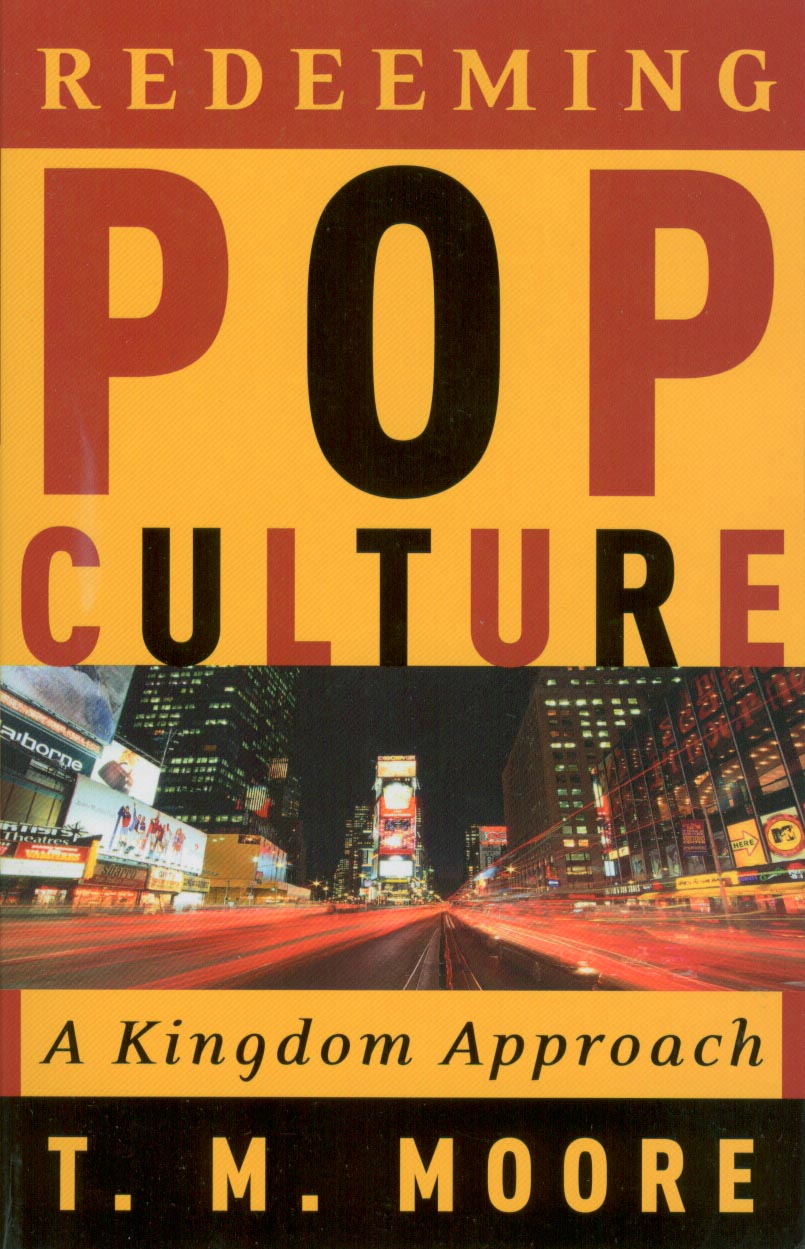
Pop Culture Defined
Popular culture (commonly known as pop culture) is the totality of ideas, perspectives, attitudes, memes,images and other phenomena that are deemed preferred per an informal consensus within the mainstream of a given culture, specifically Western culture of the early to mid 20th century and the emerging global mainstream of the late 20th to 21st century. Heavily influenced by mass media, this collection of ideas permeates the everyday lives of the society. By contrast, folklore refers to the cultural mainstream of more local or pre-industrial societies.
Popular culture is often viewed as being trivial and "dumbed-down" in order to find consensual acceptance throughout the mainstream. As a result, it comes under heavy criticism from various scientific[citation needed] and non-mainstream sources (most notably religious groups and countercultural groups) which deem it superficial, consumerist, sensationalist, and corrupted.
The term "popular culture" itself is of 19th century coinage, in original usage referring to the education and "culturedness" of the lower classes. The term began to assume the meaning of a culture of the lower classes separate from and opposed to "true education" towards the end of the century, a usage that became established by the interbellum period. The current meaning of the term, culture for mass consumption, especially originating in the United States, is established by the end of World War II. The abbreviated form "pop culture" dates to the 1960s.